

Contact Info
ADDRESS
21471 Foothill Boulevard Suite EHayward, CA 94541
GET DIRECTIONS >

We joke about snoring and falling asleep anywhere — but the truth is, these could be signs of something serious. If someone who loves you has noticed your snoring, or if you never feel rested, take a moment to check the symptoms below.
You checked 0 symptoms
Talk to Dr. ShahObstructive sleep apnea is a serious condition. Left untreated, it can lead to a host of health issues — negatively affecting the body and mind.
Untreated OSA increases the risk of congestive heart failure, atrial fibrillation, and coronary artery disease.
Untreated OSA increases the risk for stroke. High blood pressure caused by sleep apnea further elevates this risk.
When oxygen drops during apnea events, adrenaline spikes — contributing to high blood pressure and anxiety.
OSA can cause insulin resistance and alter glucose metabolism, increasing the risk of developing diabetes.
People with OSA are far more likely to get cancer than those without it. Untreated OSA may also promote tumor growth.
Obstructive sleep apnea has been associated with depression, mood disorders, and decreased quality of life.
Untreated OSA is linked to problems with thinking, reasoning, memory, brain fog, and increased Alzheimer's risk.
Daytime sleepiness from OSA increases the risk of car crashes and workplace accidents, and impairs reaction times.
Obstructive sleep apnea (OSA) occurs when the muscles in the back of your throat relax too much during sleep, allowing soft tissue and the tongue to collapse into the airway. This blocks normal breathing — sometimes hundreds of times per night.
Each time the airway closes, your brain forces you to wake up just enough to resume breathing. You may not remember these awakenings, but they fragment your sleep and starve your body of oxygen.
The good news? OSA is completely treatable. And treatment doesn't have to mean a bulky CPAP machine. A custom oral appliance, made right here in our office, offers a comfortable, effective alternative.

Open Airway
Normal breathing during sleep — air flows freely

Blocked Airway
With OSA — tongue and tissue collapse, blocking air
Oral appliance therapy (OAT) uses a custom-made, mouth guard-like device worn during sleep to keep your airway open. It's the comfortable CPAP alternative you've been looking for.
Bulky mask covers nose and mouth
Noisy motor disrupts sleep
Requires electricity to operate
Difficult to travel with
Regular replacement of masks, filters & tubes
Many patients stop using it
Small, discreet — fits in the palm of your hand
Completely silent
No electricity needed
Easy to pack — perfect for travel
Durable, low ongoing costs
Higher patient compliance rates
Oral appliances are an effective, FDA-cleared alternative. They maintain an open airway and are recommended for patients who prefer a therapy other than CPAP or are CPAP intolerant.
OAT has similar effectiveness with better compliance rates. In "real-world" use, patients are more compliant with OAT, making it equally or more effective overall.
OAT is effective in managing severe OSA alone or combined with CPAP. Similar health outcomes were found between CPAP and OAT for moderate to severe cases.
OAT is covered by most commercial medical insurance and Medicare. It's billed through medical insurance, not dental — and our team handles the paperwork.
From your first visit to better sleep, here's exactly what to expect.
We ask screening questions, take your vitals, and may capture X-rays or photos of your mouth to assess your needs.
We coordinate with your physician for a sleep evaluation and sleep test to confirm a diagnosis of sleep apnea.
Impressions are taken to create an oral appliance custom-made just for you. We'll show you how to properly care for it.
Your appliance is adjusted for an open airway and a comfortable fit. You may run a few sleep tests to confirm effectiveness.
Regular check-ups ensure the device is working and you're comfortable. Adjustments are made as needed for the best results.
Your oral appliance is small, quiet, easy to use, and comfortable. Better sleep means better health and better quality of life.
Grove Hill Dental • Hayward, CA
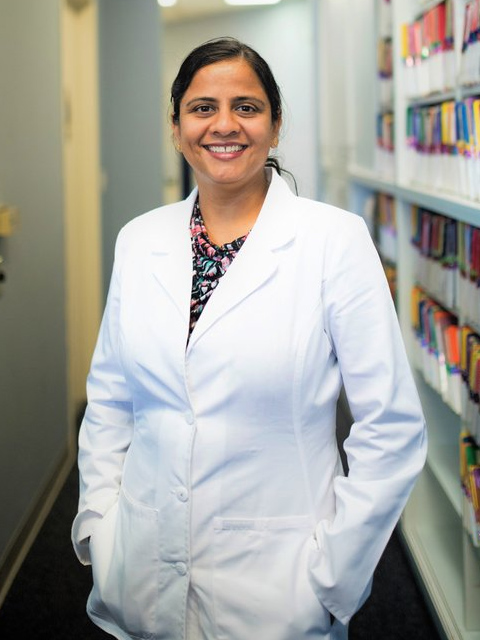
Dr. Shah is a qualified dentist with specialized training in dental sleep medicine. She is committed to helping patients get the restful sleep they deserve through comfortable, effective oral appliance therapy.
At Grove Hill Dental, we follow the American Academy of Dental Sleep Medicine (AADSM) standards of practice, use only FDA-cleared oral appliances, and provide comprehensive follow-up care for every patient.
Qualified dentist trained in dental sleep medicine
Follows AADSM standards of practice
Uses FDA-cleared, effective oral appliances
Comprehensive follow-up and ongoing care
Experienced with medical insurance billing
Obstructive sleep apnea (OSA) is a sleep disorder in which the muscles at the back of the throat relax too much during sleep, causing the soft tissue and tongue to collapse and block the airway. This can happen dozens or even hundreds of times per night, disrupting your sleep and reducing oxygen levels in your body. It affects an estimated 1 in 5 adults, and most cases go undiagnosed.
Common signs include loud or frequent snoring, gasping or choking during sleep, waking up feeling unrefreshed, morning headaches, excessive daytime tiredness, frequent nighttime bathroom trips, and difficulty concentrating. If you or a loved one has noticed these symptoms, we recommend scheduling a screening. A sleep test, coordinated with your physician, is needed for a formal diagnosis.
An oral appliance is a custom-made, mouth guard-like device worn during sleep. It works by gently stabilizing the jaw in a forward position to keep the upper airway open, preventing the tongue and soft tissue from collapsing and blocking your breathing. Oral appliances are FDA-cleared, clinically proven to treat sleep apnea and snoring, and are only worn while you sleep.
Yes. While CPAP may show slightly greater efficacy in laboratory settings, in real-world use, patients are more compliant with oral appliance therapy — making it equally or more effective overall. Research shows OAT reduces sleepiness, improves quality of life, reduces blood pressure, and lowers cardiovascular mortality risk. OAT is comparable to CPAP in patient satisfaction, compliance, and treatment effectiveness.
Yes. OAT is effective in managing severe OSA on its own or, in some cases, in combination with CPAP. Research has found similar health outcomes between CPAP and OAT among patients with moderate to severe sleep apnea. When used together with CPAP, an oral appliance can allow CPAP pressure to be substantially lowered, increasing comfort and improving compliance.
Oral appliance therapy is covered by most commercial medical insurance and Medicare. It's important to note that OAT is billed through medical insurance, not dental insurance. Our team is familiar with the necessary documentation, pre-authorization, and other insurance requirements, and we'll help guide you through the process.
Side effects of oral appliance therapy are generally so mild that most patients don't notice them or aren't bothered by them. Some patients may experience temporary jaw soreness or changes in their bite when they first start using the appliance. Dr. Shah is trained to mitigate side effects, and for most patients, treating their sleep apnea is so important that any minor side effects don't dissuade them from using their oral appliance.
An oral appliance treats sleep apnea but does not cure it. The FDA has not approved any dental device to cure sleep apnea. Oral appliances work by stabilizing the jaw to keep the upper airway open while you sleep. You still have sleep apnea and need to use the oral appliance every time you go to sleep to benefit from the therapy. The good news is that consistent use leads to dramatically better sleep and overall health.
We take detailed impressions of your teeth and create a custom appliance specifically designed for your mouth. This is not an over-the-counter product — it's a precision medical device. Once it's ready, Dr. Shah fits and adjusts the appliance to ensure proper positioning, maximum effectiveness, and comfortable fit. Additional adjustments are made as needed during follow-up visits.
Follow-up care is a critical part of oral appliance therapy. After receiving your appliance, Dr. Shah will work with you to get it into the optimal position for comfortably and effectively treating your sleep apnea. You'll then have regular follow-up appointments for as long as you use your oral appliance. During these visits, we'll ensure the appliance is working properly and remains comfortable. If you ever experience pain or discomfort, contact us right away.
Getting started is easy. Simply call our office at (510) 537-6175 or click the "Schedule a Consultation" button to request an appointment. During your first visit, we'll conduct a screening, discuss your symptoms, and coordinate with your physician for any needed sleep testing. From there, we'll create a personalized treatment plan to help you get the restful sleep you deserve.
Take the first step toward restful sleep and better health. Contact Grove Hill Dental today to schedule your consultation.
